
In the intricate dance of mineral processing, fluorite stands apart—a cornerstone of modern industry hiding in plain sight within complex ores. Known as the "industrial monosodium glutamate," calcium fluoride's unique properties power everything from aluminum smelting to lithium-ion batteries. Yet unlocking its full potential demands surgical precision in separation technology.
This guide unveils the cutting-edge methodologies transforming raw ore into 97%+ purity fluorite concentrate. Through AI-driven sorting, multistage flotation chemistry, and thermal refinement, we dissect the six-step industrial purification process—each parameter calibrated to overcome quartz’s hardness (Mohs 7) and calcite’s chemical mimicry. For mining engineers and metallurgists, mastering these techniques isn’t just about yield; it’s about rewriting the economics of mineral extraction.
How Can Impurities Be Precisely Separated From Complex Ore and High-purity Fluorite Efficiently Extracted?
The path to high-purity fluorite is paved with mineralogical hurdles. While quartz’s abrasive resilience complicates grinding, calcite’s shared calcium ions create flotation "identity theft." Here’s how modern beneficiation turns these challenges into opportunities.
Core Challenges in Fluorite Purification
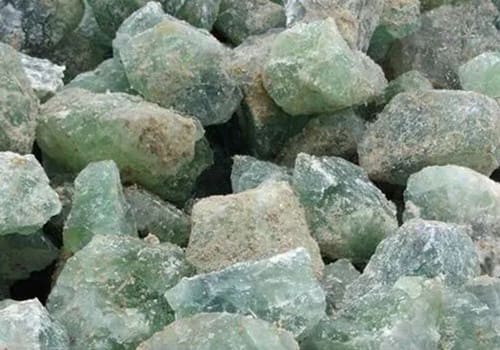
The key lies in exploiting the hardness difference between quartz (Mohs 7) and fluorite (Mohs 4), while utilizing the acid solubility of carbonate minerals (e.g., calcite) as a secondary breakthrough.
Industrial Six-Step Purification Process
From AI-guided XRT sorters to HF acid leaching’s delicate balance, each stage is a calculated strike against impurities. Let’s demystify the sequence that elevates run-of-mine ore to chemical-grade specs:
1. AI-Powered Pre-Sorting
- Equipment: XRT-based ore sorter
- Capacity: 50 t/h
- Critical Setting: X-ray energy @ 80–100 keV
- Efficiency: Reduces SiO₂ from 25% → 8%
2. Multistage Grinding & Froth Flotation
- Primary Rod Mill: Grind to 65% passing 200 mesh
- Secondary Ball Mill: Target P80 = 74 μm
- Reagent Formula:
Depressant: Sodium silicate (modulus 2.4, dosage 800 g/t)
Collector: Oleic acid + oxidized paraffin soap (3:1 ratio, total 1,200 g/t)
3. Deep Silica Removal
- High-Pressure Roller Mill + Magnetic Separation (1.2 Tesla)
- Pro Tip: Add oxalic acid (0.5 kg/t) during grinding to boost iron removal by 40%
4. Acid-Base Refinement
- Two-Stage Acid Leaching: ①5% HCl at 60°C → removes carbonates; ② 2% HF at ambient temp → dissolves siliceous inclusions
- Neutralization pH: 7.5–8.0
5. Thermal Upgrading
- Rotary Kiln Settings:
Temperature zones: Drying (200°C) → Calcination (650°C) → Cooling
Retention time: 90 min - Whitening Effect: Enhances brightness from 85% → 93%
6. Final CCD Color Sorting
AI-Based Optical Sorter:
- Discrimination threshold: ΔE > 3.0 (automatically rejects impurities)
- Capacity: 8 t/h per machine
Cost Optimization Strategies
Reagent Recycling: Nano-bubble flotation tailings reuse cuts collector costs by 30%
Thermal Integration: Utilize calcination waste heat for acid leaching (25% energy savings)
Quality Control Benchmarks
- Chemical-Grade Fluorite:CaF₂ ≥ 97%(GB/T 5191-2017)
- Silicon Content: Grade I requires <1.0% SiO₂
- Problem-Solver: If Pb contaminationexceeds limits, add diethyl dithiocarbamate (50 g/t) for selective suppression
Fluorite Ore Beneficiation Methods and Process Flow

No two ore bodies are alike. Matching geology to methodology requires a toolkit of five proven approaches—from gravity’s simplicity to chemistry’s precision:
Five Common Fluorspar Beneficiation Methods
In nature, fluorspar often occurs alongside quartz, calcite, barite, sulfides, and other minerals. Based on ore characteristics, the following five beneficiation methods are commonly employed:
1. Hand Sorting
Applicable to: High-grade, lump fluorspar ore.
Principle: Manual selection based on visual inspection of color, luster, crystal form, and other characteristics.
Advantages/Disadvantages: Low investment and cost, but labor-intensive and inefficient; suitable for small-scale mining.
2. Gravity Separation
Applicable to: Coarse-grained deposits with significant density differences from gangue.
Equipment: Jigging machines, shaking tables, spiral chutes.
Characteristics: Chemical-free and environmentally friendly. Often used as a pre-concentration stage to remove large amounts of waste rock, typically achieving recovery rates of 60%-70%.
3. Flotation Method (Core Method)
Applicable: Fine-grained distribution, low-grade associated fluorite deposits.
Principle: Separation based on differences in surface physicochemical properties using added reagents.
Key Reagents:
Collectors: Oleic acid, paraffin oxide soap, etc.
Inhibitors: Water glass (inhibits quartz), carboxymethyl cellulose (inhibits calcite).
Advantages: High recovery rate (up to 80%-90%), currently the most widely used method.
4. Magnetic Separation
Applicable: Fluorspar ore containing magnetic impurities (e.g., magnetite, hematite).
Function: Specifically used for iron removal and purification, enabling products to meet the requirements of “high-precision, high-quality” glass or optical materials.
5. Chemical Method
Applicable: Extremely difficult-to-process ores with high impurity content (containing phosphorus, sulfur).
Approach: Acid leaching or alkali leaching. Although costly and requiring environmental protection measures, it is irreplaceable in deep purification processes.
Mineral Processing Schemes for Different Types of Fluorspar Ore
Customization is king. Whether confronting sulfide interference or liberating microcrystalline fluorite, these tailored flowsheets are your blueprints.
| Ore Type | Recommended Beneficiation Method | Applicable Conditions |
| High-grade lump ore | Hand Sorting + Gravity Separation | Large particle size, easily identifiable, with distinct density differences
|
| Quartz-fluorite ore | Floating (Water Glass Suppresses Quartz) | Fine-grained inclusions require selective chemical suppression
|
| Calcite-fluorite ore | Floating (CMC Suppresses Calcite) | Similar flotability necessitates targeted suppression |
| Sulfide-fluorite ore | Preferential Floating (Floats Sulfide Ores First) | Avoid sulfide contamination through prior desulfurization |
| Low-grade complex ore | Combined Process (Gravity + Floating + Chemical) | Integrate multiple methods to enhance the grade |
Analysis of Five Mainstream Process Flows
Theory meets practice in these battle-tested circuits. Note the pH pivots and particle-size thresholds that make or recovery rates.
1. High-Grade Lump Ore: Hand Sorting + Gravity Separation Process
Hand Sorting Stage: Targets 20-100mm ore, removing waste rock with sorting accuracy exceeding 90%.
Gravity Separation Stage: Jig processing for 3-20mm size fraction; shaking table processing for 0.5-3mm size fraction, ultimately yielding concentrate with grade >65%.
2. Quartz-Type Fluorspar: Flotation Process
Grinding: Fine grinding to -0.074mm, exceeding 70% to achieve single-particle liberation.
Slurry Preparation: Add sodium silicate to suppress quartz, adjusting pH to 8-9.
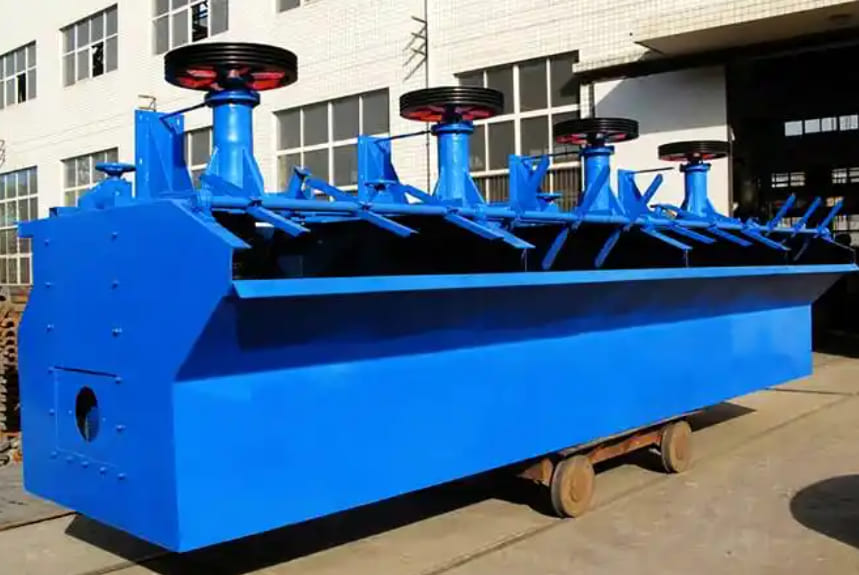
Separation: Employ a “1 roughing, 2-3 cleaning” circuit using oleic acid as collector.
3. Calcite-Type Fluorspar: Flotation Process
Separation is challenging due to shared calcium ions.
Key Points: Grind to -0.045mm at 80% size, using carboxymethyl cellulose (CMC) as a specific suppressant.
Process: Obtain concentrate through multiple cleaning stages at pH 9-10.
4. Sulfide-Type Fluorspar: Priority Flotation Process
Step 1: Prioritize flotation of sulfides (using xanthate and No. 2 oil) to remove sulfur, copper, and other impurities.
Step 2: Add sodium carbonate to tailings to adjust pH to 9, then proceed with fluorspar flotation.
5. Low-grade complex ore: Combined flotation-leaching process
Pre-stripping: Remove 60%-70% low-density gangue via spiral chute.
Enrichment: Flotation elevates grade to 60%-65%.
Deep processing: Hydrochloric acid leaching removes trace amounts of calcite and iron impurities, thereby boosting the concentrate grade to over 85%.
Conclusion
The era of blanket processing is over. Today’s fluorite extraction demands a symphony of optical sorting, reagent chemistry, and energy recovery—all orchestrated to achieve 93% brightness and <1% SiO₂. As electric vehicle and solar industries escalate demand, this guide’s methodologies offer more than purity; they deliver competitive edge. From Honduras to Hunan, operations adopting these protocols aren’t just refining minerals—they’re refining profitability.