
In the high-stakes arena of iron ore processing, a quiet revolution is turning ‘unusable’ reserves into economic assets. By marrying time-tested flowsheets with cutting-edge innovations—from AI-driven sorting to nanoparticle-enhanced grinding—pioneering operations are achieving once-unthinkable metrics: >50% waste rejection rates and nine-figure annual gains.
Comprehensive New Technology Solutions for Addressing Iron Ore's “poor, fine-grained, and complex”
Faced with the inherent challenges of iron ore resources being “poor, fine-grained, and complex,” the mining industry's breakthrough lies in systematically integrating cutting-edge technologies validated through large-scale production into the classic process of “mining - crushing and grinding - separation - purification.” This upgrade model—where “process serves as the backbone and technology as the soul”—achieves multidimensional breakthroughs in efficiency, cost, and resource utilization while inheriting proven reliability.
Section 1: Intelligent Mining—The First Link in the Value Chain
Core Process
Ore Mining → Loading and Transportation → Conveying to Crushing and Grinding
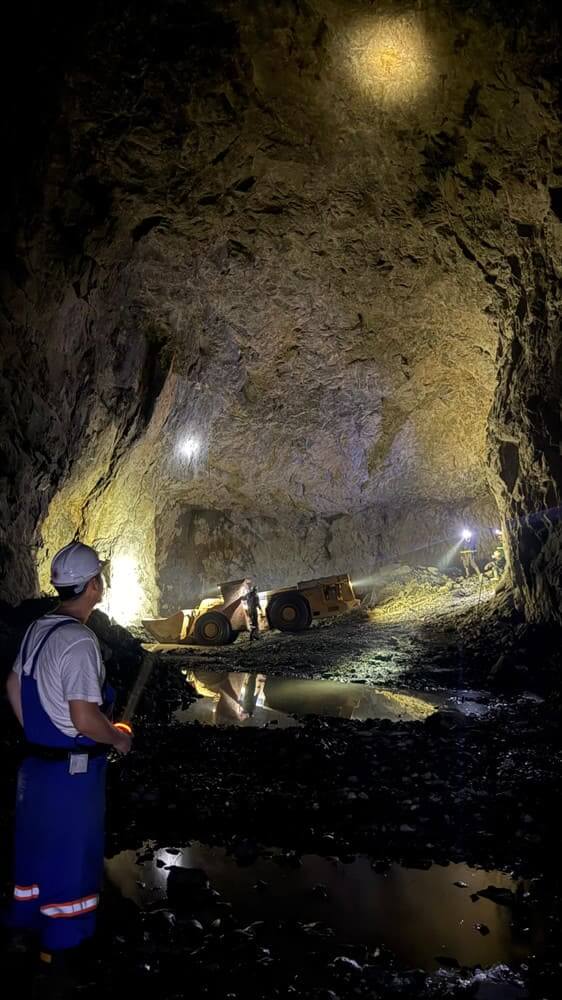
Mining enters its cognitive era—where rock doesn't just get extracted, but communicates its value potential from the very first scoop.
Upgrade Path and Core Technologies
- Intelligent Backfilling Mining and Unmanned Cluster Operations: Replacing traditional labor-intensive mining models. Through remote control, autonomous driving, and intelligent scheduling systems, it is possible to achieve full automation in loading, hauling, and transporting operations. Combined with high-precision backfilling technology, this controls dilution rates at the source.
- Online Detection and Intelligent Ore Blending Technology: Revolutionizes the crude “mine-and-ship-as-is ”approach. Utilizes online analyzers at mine outlets or pre-crushing stations to monitor ore grades in real time. Dynamic blending algorithms dynamically allocate ore of varying grades, ensuring highly stable grinding feed properties and laying the foundation for efficient downstream separation.
Empirical Results
- Following implementation at Ansteel Qidashan Iron Mine, the dilution rate during mining was successfully controlled below 8%, with overall mining efficiency increasing by over 30% and mining costs per ton significantly optimized.
- Jiuquan Iron & Steel's Jingtieshan Mine implemented precise ore blending, stabilizing the iron grade of milled ore within a narrow range of 32%-35%. This directly reduced subsequent crushing and grinding energy consumption by approximately 8% and increased separation recovery rates by 4 percentage points.
Section 2: Comminution 2.0—Where Physics Meets Digital Twins
Core Process
Raw ore crushing → Precise grading → Grinding → Conveyed to the separation stage
In the evolution of mineral processing, comminution has transformed from brute-force pulverization to an elegant interplay of advanced physics and machine intelligence. Today's smart crushing circuits don't just reduce particle size—they optimize liberation while minimizing energy waste at every stage.

Upgrade Path and Core Technologies
- High-pressure roller mill final crushing with AI-driven classification: Replacing traditional multi-stage cone crushing. High-pressure roller mills utilize the “laminar crushing” principle to significantly enhance crushing efficiency and produce more fine-grained products, reducing the burden on ball mills at the source. Combined with AI vision or online particle size analysis, they achieve precise material classification and optimize feed particle size distribution.
- High-Efficiency Energy-Saving Mills with Intelligent Grinding Control: Replacing energy-intensive traditional ball mills. Novel vertical mills like tower mills and Aisha mills demonstrate significant advantages in fine grinding through unique grinding mechanisms and superior energy efficiency ratios. Paired with big data-based intelligent control systems, they enable precise closed-loop regulation of grinding concentration and fineness, eliminating over-grinding and under-grinding.
- Ultra-wear-resistant grinding media and permanent magnet direct-drive technology: Replacing traditional steel balls and asynchronous motor drives. Nano-ceramic composite grinding balls exhibit extremely low wear rates, maintain spherical shape over extended periods, deliver higher grinding efficiency, and prevent product contamination. Permanent magnet direct-drive motors eliminate transmission components, achieve transmission efficiencies exceeding 96%, and deliver energy savings, noise reduction, and maintenance-free operation.
Empirical Results
- Chengde Tianbao Mining achieved a 25% increase in crushing system efficiency and a 12% reduction in subsequent grinding power consumption after adopting “high-pressure roller milling + AI-powered intelligent classification,” saving over 3 million yuan in annual electricity costs.
- Maanshan Iron & Steel's Baixiangshan Mine upgraded its fine grinding system with tower mills, reducing ball consumption and power consumption by 74% and 32.04% respectively, yielding annual cost savings of 28 million yuan.
- Maanshan Iron and Steel Nanshan Mine applied “nano-ceramic balls + permanent magnet direct drive” technology, reducing grinding workshop noise from 92 decibels to below 71 decibels and generating over 44 million yuan in additional annual economic benefits.
Section 3: Sorting’s Quantum Leap—From Bulk to Bespoke
Core Process
Pre-rejection → Targeted separation → Conveyed to purification stage
While traditional beneficiation treated all ore alike, today's smart separation acts like a precision-guided missile—identifying and extracting value with unprecedented specificity.
Upgrade Path and Core Technologies
- Magnetite: Promote efficient dry magnetic separation for pre-rejection of waste rock. Utilize large-scale dry magnetic separators after coarse crushing to pre-reject low-grade gangue, particularly suitable for arid regions. This approach saves over 90% water and significantly reduces mill feed volume.
- Hematite/Siderite (Difficult-to-process): Breakthrough application of suspended magnetization roasting-weak magnetic separation technology. Rapidly magnetize and roast ore within seconds to convert weakly magnetic iron into strongly magnetic iron, enabling efficient recovery through simple magnetic separation. This fundamentally transforms the economic utilization of difficult-to-process iron ores.
- General Technology: Large-scale deployment of AI-powered photoelectric intelligent pre-sorting. Employing X-ray transmission (XRT) or high-definition visual technology, it precisely identifies and removes waste rock at the coarse-grain stage (10-80mm), directly reducing ineffective processing volume by 30%-50%at the source.
- Complex ores like limonite: Optimized combined magnetic-gravity separation process. Achieves effective enrichment of complex disseminated iron ores through synergistic multi-force field interaction.
Empirical Results
- Multiple domestic magnetite mines adopting dry pre-selection save over one million tons of water annually while improving mill feed grade.
- Jiuquan Iron & Steel's Jingtieshan Mine suspended magnetic roasting project boosted iron concentrate grade from 43% to 55.3%, recovery rate from 63% to 89.4%, generating over 100 million yuan in annual benefits.
- Over 30 low-grade iron ore mines adopting AI-powered photoelectric pre-selection achieved an average waste rejection rate exceeding 50%, reducing subsequent full-process energy, water, and steel consumption by approximately 40%.
- Combined processing techniques for Yunnan and Guangxi limonite ores can enrich raw ore grades from 35% to over 65%.
Section 4: Purification & Circularity—Closing the Loop
Core Process
Deep impurity removal → Precise purification → Tailings reuse → Production of qualified iron concentrate
The final frontier of value creation lies not just in extraction, but in purity perfection, and waste eradication.
From impurity reduction to full circularity, modern iron ore plants now operate as zero-waste ecosystems where every residual stream gets monetized.
Upgrade Path and Core Technologies
- Reverse Flotation for Silica and Phosphorus Removal: As the most mature deep purification technology, it precisely floats impurity minerals like silica and phosphorus using high-efficiency reagents, serving as the essential process for producing high-quality steelmaking raw materials with TFe > 67%.
- High-Gradient Magnetic Separation for Fine Impurity Removal: Utilizing SLon vertical ring high-gradient magnetic separators effectively eliminates “stubborn impurities” like weakly magnetic iron-bearing silicates in iron concentrates, further enhancing purity.
- Tailings Re-purification and Comprehensive Utilization: New technologies like coarse-grain flotation are applied for “re-scavenging” tailings. Simultaneously, tailings with no further extraction value are repurposed for building materials, achieving zero discharge.
Empirical Results Case in Point
- Reverse flotation technology elevates iron concentrate grade from62% to over 67.5% while reducing silicon content below 4%, significantly boosting product premiums.
- The SLon magnetic separator is deployed in over 80% of large and medium-sized domestic processing plants, achieving concentrate grades exceeding 68% with only a few yuan increase in cost per ton of ore.
- Through tailings reprocessing, Maanshan Iron & Steel's Baixiangshan Mine recovers over 60,000 tons of iron concentrate annually, generating additional profits exceeding 3 million yuan. The utilization of tailings for building materials has also developed into a mature industry.
Conclusion
This technological trifecta—smarter extraction, precision processing, and full-circle recycling—proves that today’s "uneconomic" ores are tomorrow’s profit centers. As global decarbonization pressures escalate, these scalable solutions don’t just boost margins; they redefine sustainable mining’s DNA. From the pit to the pellet plant, every efficiency percentage point now cascades into energy savings, water conservation, and shareholder value—a blueprint for the industry’s next chapter.