
Australia's gold mining industry continues to evolve with advanced processing solutions that combine efficiency with environmental responsibility. In this exclusive case study, we examine a state-of-the-art 250-ton-per-hour alluvial gold processing plant that's setting new standards for small to medium-scale operations. This detailed walkthrough covers everything from ore characteristics to innovative processing techniques, revealing why proper plant design makes all the difference in gold recovery rates.
Addressing Modern Mining Challenges
The Australian mining landscape presents unique opportunities and challenges for gold recovery operations. The local miner sought reliable processing equipment capable of handling their specific alluvial deposits, while allowing for future expansion. What makes this project particularly noteworthy is its focus on simplicity and efficiency - proving that advanced recovery doesn't require overwhelmingly complex systems.
250TPH Alluvial Gold Process Plant in Australia
Project Overview
This project is located in Australia. The client is a local mining company, focusing on small-scale Alluvial gold mining. They required a reliable and easy-to-operate gold processing solution.
Raw Ore Information
The raw ore is alluvial gold with a maximum feed size of 150 mm. The gold particles are mainly fine gold, without sticky clay.
Processing Capacity Requirement
The client required a processing capacity of 250 tons per hour, with the possibility to upgrade to 300TPH to 350TPH in the future.
Understanding the raw material is always the first step in designing an effective processing solution.
Raw Material Characteristics: The Foundation of Good Design
The success of any gold processing operation begins with thoroughly understanding the ore body. This project processes alluvial gold deposits with maximum feed sizes of 150mm, featuring predominantly fine gold particles without problematic clay content. Unlike troublesome sticky clays that complicate washing processes, these relatively clean deposits allowed for optimized equipment selection.
With the material properties established, let's examine how these characteristics influenced capacity planning.
Capacity Planning: Meeting Today's Needs With Tomorrow in Mind
The client's immediate requirement for 250TPH processing capacity came with an important forward-looking consideration: the need for future expansion to 300-350TPH. This scalability requirement significantly influenced equipment selection and plant layout decisions. Modern mining operations must balance current production needs with anticipated growth, making flexibility a key design criterion.
Now that we've established parameters, let's dive into the processing solution.
Our Process Design & Solution
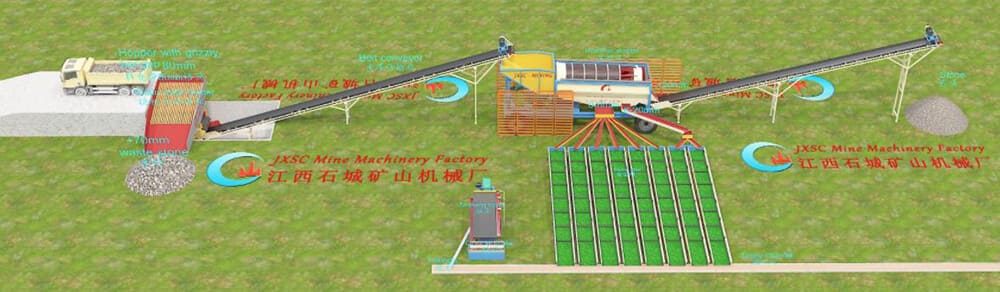
Process Description:
1. Loader or Excavator feeds raw ore into the trommel screen. The trommel screen is used to wash off clay from ore and screen out different-sized particles.
2. Overscreen materials of the trommel are transported to a far place by belt conveyor, this is waste sand.
3. Underscreen materials 0-6mm of trommel are sent to the sluice box to recover fine gold, and 6-20mm of trommel is sent to the other sluice box to recover gold nuggets.
4 . Concentrate the sluice box on the shaking table to recover all the gold.
Main Equipment List
- Plate feeder
- Trommel screen
- Shaking Table
- Sluice Box
- Water Pumps & Slurry Pump
- Diesel Generator & Control Panel
This Plant Applicable Clients
✔ Suitable for:
- Medium-scale gold mining projects
- Alluvial gold without stick clay
- Capacity from 250 -300TPH
✖ Not suitable for:
- Rock gold process plant
- With sticky clay, hard-to-wash materials
Customer Questions & Our Answers
① What gold recovery rate can be achieved?
The gravity recovery rate can reach 85–90%, depending on the ore condition.
② Why use a trommel screen not use trommel scrubber for washing?
We determine whether to use a drum washing machine or a drum screen based on the specific conditions of the customer's mine site. In this customer's case, the material at their mine does not contain sticky clay, making it very easy to clean.

③ Why not use a gold centrifugal?
The primary function of the centrifuge is to perform preliminary concentration of gold concentrate, with a feed particle size of 0–5 mm. However, this customer's gold ore consists mainly of gold nuggets, and the concentrate particle size is almost entirely greater than 6 mm. Therefore, the centrifugal concentrator is not well-suited for this application.
④ Why use so many sluice boxes?
Because this customer's gold particles were relatively large, our engineers designed the process based on his ore characteristics: 0-6mm particles were fed into some sluice boxes for gold recovery, and 6-15mm particles were fed into other sets of sluice boxes. This approach ensures the best possible recovery rate.
⑤ Do your products have CE or ISO certificates?
Yes, all equipment in this order is CE and ISO certified.
⑥ If an engineer is required, what is the cost?
If the buyer requires JXSC to dispatch engineers to the mine site for installation and commissioning guidance, the following additional fees shall apply:
1) Engineer salary: $150 USD per day per person. Installation duration depends on the readiness of the customer's mine site.
2) Round-trip airfare.
3) Visa application fees.
4) Other potential expenses incurred before and after installation, such as hotel accommodation costs while awaiting flights.
5)Meals and transportation.
⑦ What’s the payment term of your company
Our company's payment terms: 40% T/T deposit before production commencement, 30% interim payment upon completion of 50% of goods, remaining 30% balance payable before factory shipment once all goods are fully prepared.
With technical questions answered, let's examine practical implementation.
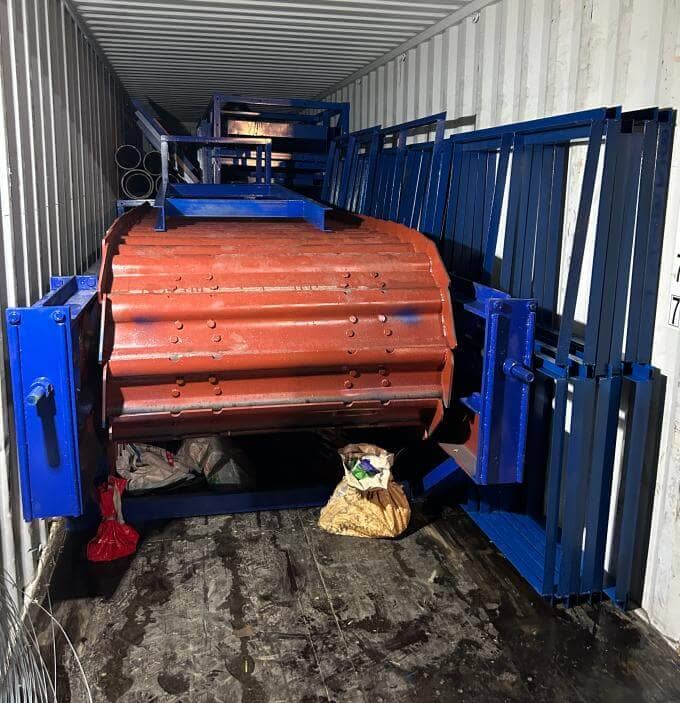
From Factory to Field: Manufacturing and Installation
The project timeline followed JXSC's proven implementation framework:
- Manufacturing Phase: All equipment is built to precise specifications.
- Delivery Logistics: Careful coordination ensured all components arrived on schedule.
- Installation Support: Optional engineering assistance available for commissioning.
The successful deployment proves that remote installations can run smoothly with proper planning and communication.

Customer Feedback
The client is satisfied with the plant performance and gold recovery results. The system operates stably and meets the expected production target.
Why The Customer Chose JXSC?
Several factors convinced the client to choose this solution:
- Custom Engineering: Truly tailored to specific ore characteristics.
- Proven Technology: Reliable rather than experimental approaches.
- Comprehensive Support: From design through potential installation assistance.
- Industry Experience: 40 years of mineral processing expertise.
In an industry flooded with equipment suppliers, this combination of customization and reliability proved decisive.
Conclusion: Lessons for the Modern Gold Miner
This Australian case study demonstrates that successful gold processing doesn't require chasing every new technology, but rather applying the right technologies for specific deposit characteristics. The project's 85-90% recovery rates prove that well-designed gravity systems remain highly effective for alluvial deposits. Perhaps most importantly, it shows how experienced engineering teams can develop solutions that balance immediate production needs with future expansion plans. As gold mining becomes increasingly challenging, such thoughtful, customized approaches will separate successful operations from marginal ones.
For operators considering similar projects, the key takeaways are clear: understand your ore completely, design for your specific conditions rather than generic solutions, and partner with experienced providers who offer both technical excellence and practical operational support. The future of profitable gold mining lies in this kind of precision approach.