
Oxide mineral beneficiation starts with the target product and the properties of the feed. Smoky quartz and amethyst can yield saleable crystals, and suitable rejects may supply industrial silica. Agate processing prioritizes intact nodules, with lower-value fragments and associated quartz assessed separately for industrial use. Crocoite processing typically focuses on selective specimen recovery. Any bulk concentration route requires a defined market, ore testwork, and controls for lead and hexavalent chromium.
Smoky quartz and amethyst are crystalline varieties of silica (SiO₂), and agate is banded chalcedony, a fine-grained form of silica. Crocoite (PbCrO₄) is a chromate mineral associated with oxidized lead deposits. Each feed requires a circuit suited to its mineralogy and saleable product. Even two quartz deposits can require different equipment if one carries loose clay and the other contains iron-bearing minerals locked inside the grains.
For our customers, the starting point is a representative ore sample and a target product specification. We use feed characteristics and test results to scope the flowsheet and equipment. For a coarse-product circuit, compare the weight and condition of the recovered pieces. For an industrial silica circuit, compare dry product yield, particle-size distribution, and impurity levels against the buyer’s limits.
Smoky Quartz Beneficiation
Smoky Quartz Introduction
Smoky quartz is a gray to brown or nearly black variety of quartz. Its color comes from natural irradiation acting on aluminum-related defects in the crystal lattice. Color is useful in identifying and sorting decorative material, while industrial suitability depends on measured chemistry and mineralogy. A smoky crystal can carry lattice-bound aluminum, and a visually clean piece can contain fine mineral inclusions. These distinctions affect how far a purification circuit can upgrade the feed.
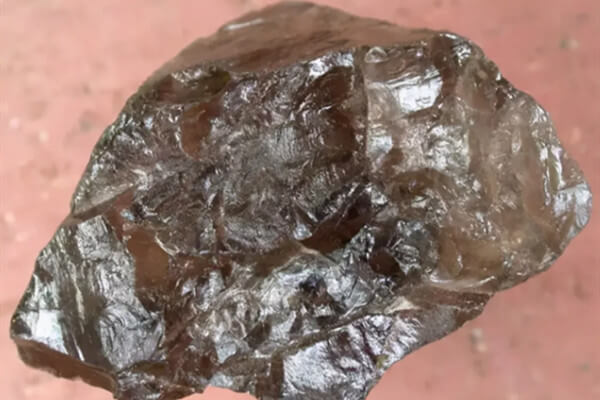
Gem Grade and Specimen Grade Smoky Quartz
Recover intact crystals and clusters before bulk size reduction. A low-drop feed arrangement, gentle washing where appropriate, and a manual picking belt allow operators to separate saleable pieces from host rock and broken quartz. Trial washing on representative material before specifying an aggressive scrubber. A washing stage that removes more clay can also reduce the value of the coarse product if it chips crystal tips or breaks clusters. Faceting and polishing take place downstream of this separation step.
Industrial Grade Smoky Quartz
A candidate industrial quartz circuit can follow this sequence: controlled crushing and screening, scrubbing and desliming, impurity separation as required, then dewatering and final sizing. Set the crushing target by testing how readily quartz separates from unwanted minerals and by checking the buyer’s size specification. Excess fines can reduce saleable yield and add load to the classification and water recovery circuits.
A jaw crusher can provide primary size reduction on competent quartz-bearing rock. Vibrating screens separate saleable size fractions and return oversize for further crushing where appropriate. For feed with surface clay or coatings, test a washer or attrition scrubber followed by classification. Desliming equipment must be sized against the actual fines load. Check the overflow for recoverable quartz before committing to a cut size.
When iron levels remain high, test magnetic separation against the iron-bearing phases identified in the sample. A high-intensity magnetic separator can reject suitable liberated minerals, while iron enclosed within quartz can require finer liberation or limit the achievable product grade. Where liberated feldspar or mica remains, flotation can be assessed as an additional stage. Any chemical purification step should be justified by test results, the product price, and the cost of water treatment and residue management.
Equipment Sizing and Water Recovery
Size the circuit on the expected dry tonnes per hour and the range of feed conditions, including wetter or clay-rich material. Track circulating loads when oversize returns to the crusher. Where wet screening and classification are required, estimate the water balance and test whether a dewatering screen, thickener, or filter can handle the relevant solids stream. Check how much water can be recycled and whether suspended fines in the return water affect washing or separation. Include dust controls at crushing, screening, and transfer points where crystalline silica dust can be generated.
An equipment quotation should state the feed size range, design throughput, target product split, and assumptions about moisture and clay. These inputs determine whether a proposed machine can maintain capacity under normal operating conditions. They also give the buyer a basis for comparing a stand-alone washer or screen with a complete line that includes feed regulation, conveyors, and product dewatering.
Amethyst Beneficiation
Amethyst Ore and Deposit Characteristics
Amethyst is purple quartz with iron-related color centers. It occurs in hydrothermal veins and in geodes within volcanic rock. Vein material can arrive as mixed quartz and host rock. Geode-bearing feed may contain complete cavities, broken shell, and loose clusters. Identifying which types arrive at the plant helps determine whether the first stage should be coarse picking, gentle washing, or separate handling of selected pieces.
Gem Grade Amethyst
For a geode or crystal recovery line, prioritize feed control and access for visual inspection. A receiving area can separate large
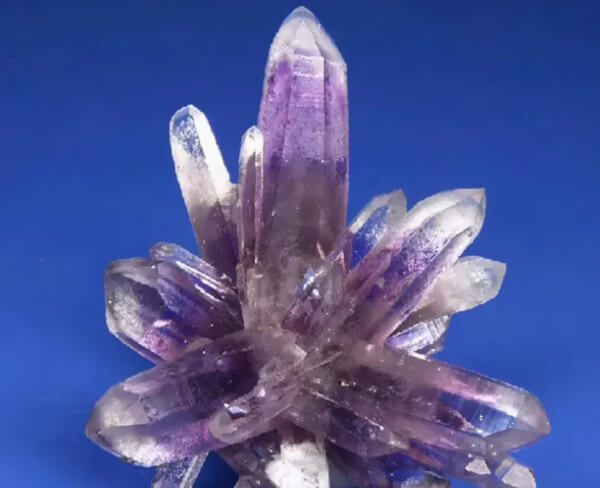
pieces for individual handling while a picking belt handles smaller material at a controlled rate. Where washing is needed to reveal crystal surfaces, test spray pressure and handling on a small lot before applying it to fragile clusters. Sort saleable pieces by crystal condition, size, and color. Keep opening or trimming geodes to the work required for the display product.
Industrial Grade Amethyst and Associated Quartz
Evaluate broken, pale, or included quartz separately from the specimen stream. Sample associated vein quartz and rejected geode material independently if they differ in host-rock content. Compare silica and impurity assays by size fraction. A mixed composite can hide a clean coarse fraction or dilute a high-iron fraction that would cause a glass-grade product to fail its specification.
If tests show that washing and screening can meet the product specification, scope that circuit first. Add crushing only where needed for liberation or sizing. Test magnetic separation when discrete iron-bearing minerals are present, and assess flotation if liberated silicate gangue remains. Measure the quality and mass of the finished product after each stage. A circuit that improves assay but produces too little saleable silica may have little value as a secondary line.
Crocoite Beneficiation
Crocoite Introduction
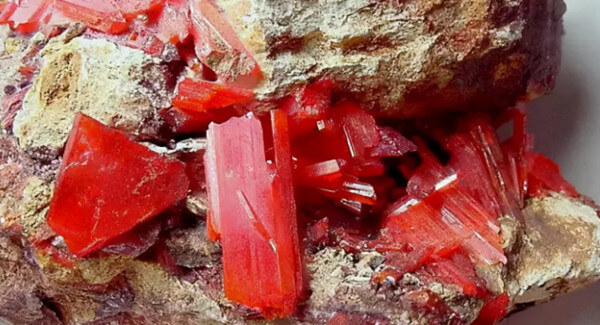
Crocoite (PbCrO₄) is a lead chromate mineral found in the oxidized zones of some lead deposits. It belongs to the chromate mineral class. Its orange-red color, bright luster, and elongated prismatic crystals make well-preserved specimens attractive to collectors. Crocoite also has historical significance as the mineral from which chromium was first identified. Chromite is the principal commercial chromium ore, so a crocoite processing project typically starts with an assessment of specimen value.
Crocoite Processing and Beneficiation Methods
Specimen recovery starts with coarse hand sorting before crushing. Use controlled feeding and low-drop transfer points to protect the brittle crystals. An inspection station or slow picking belt allows operators to identify promising pieces and recover them with enough host rock to support the crystals. Optical sorting may help reject barren rock where exposed crocoite has consistent color contrast. Manual inspection is still needed to assess crystal damage and matrix stability.
Treat bulk concentration as a separate flowsheet. If a project has a defined concentrate market, start with mineralogical analysis, size-by-size assays, and liberation tests. For the fraction selected for bulk processing, test staged crushing and screening to find the coarsest size that liberates crocoite while limiting fines. Evaluate washing and desliming where clay interferes with separation, and assay the slimes to quantify any lead and chromium reporting to that stream.
Crocoite’s high density makes gravity separation a candidate where it is sufficiently liberated from lighter gangue. A jig can be tested on suitably sized coarse fractions, while shaking tables or centrifugal concentrators may be evaluated on finer fractions. Magnetic separation can remove liberated magnetic gangue. Consider flotation only if laboratory tests demonstrate selective recovery and the project can manage the resulting water and residues. Select equipment based on measured concentrate grade, recovery, and the distribution of lead and chromium across all process streams.
Crocoite contains lead and hexavalent chromium. Design exposure and water controls alongside the separation circuit, including dust capture at enclosed transfer points and controlled concentrate dewatering. Characterize process water, slimes, and tailings for lead and chromium, then specify treatment, containment, and disposal according to site requirements.
Agate Beneficiation
Agate Introduction
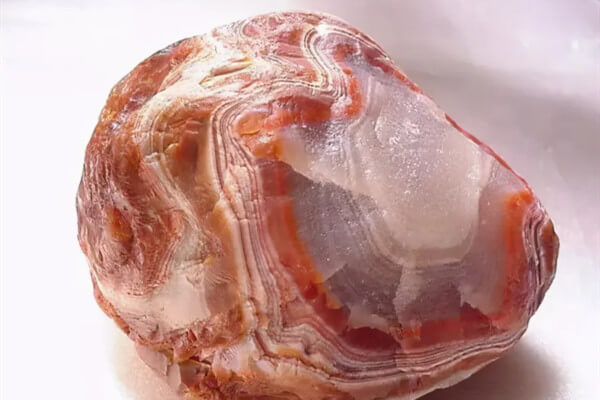
Agate is a banded variety of chalcedony, a fine-grained form of silica (SiO₂). Its bands vary in color and translucency and may be hidden beneath a weathered rind. The value of rough agate depends on usable size, pattern, translucency, and the extent of cracking. Some pieces, known as enhydro agate, contain liquid in a sealed cavity. Preserving the cavity is part of recovering these pieces as specimens.
Agate Processing and Beneficiation Methods
For ornamental and specimen-grade agate, the main circuit is coarse picking, washing, screening, and grading. Recover fragile or high-value pieces ahead of mechanical washing where they can be identified. Wash the remaining feed to remove clay and surface dirt, then use a trommel or vibrating screen to split it into size fractions for inspection. A rotary scrubber may help with strongly adhering clay. Trial its settings on representative feed and compare cleaning performance with nodule breakage. Where agate is embedded in competent host rock, test selective breaking before specifying a crusher. Measure how much intact agate each approach recovers.
Optical color sorting can assist where clean agate surfaces reliably contrast with the host rock. Use manual grading to assess exposed banding, translucency, shape, cracks, and usable size. A surface image may reveal little about the internal pattern of a weathered nodule. Direct sound material to cutting, carving, ornamental, or specimen markets according to its grade. Cutting and polishing are downstream finishing steps.
For industrial silica, qualify lower-value fragments and associated quartz against a buyer’s specification. Test chemistry and particle size before designing a circuit. A candidate flowsheet may include crushing, screening, scrubbing, and desliming. Add gravity separation where tests show a useful density contrast, magnetic separation for liberated iron-bearing minerals, or flotation for separable silicate gangue. Consider chemical leaching only if residual impurities prevent the product from meeting specification and the expected yield and value justify the added cost. Size the equipment around feed variability, the recovery of saleable silica, and the water and fines loads.
Conclusion
Select the flowsheet and equipment around the saleable product. Recover intact smoky quartz and amethyst crystals before evaluating the remaining quartz for industrial silica. For crocoite, prioritize selective specimen recovery and assess bulk concentration only where testwork supports recovery and the project can manage lead- and chromium-bearing process streams. For agate, use washing, screening, and grading to recover sound nodules, and test lower-value material against the buyer’s silica specification. Compare saleable yield and product quality at the expected feed rate before sizing equipment.
For an ore processing proposal, send us the deposit or stockpile material description, representative samples or recent assay results, the maximum feed size, expected throughput, and target product specifications. Include site water availability and any existing equipment you plan to reuse. These inputs help us identify the tests needed to select and size equipment and establish a basis for comparing flowsheet options.