
The mining industry is witnessing a paradigm shift in mineral processing with the advent of ultra-large, intelligent flotation machines, with the 680 m³ flotation cell emerging as a game-changing innovation in molybdenum (Mo) beneficiation. As global demand for critical metals surges and energy efficiency becomes paramount, these massive flotation units offer higher throughput, lower operating costs, and smarter process control compared to traditional flotation setups. This article explores the design innovations, key performance metrics, and real-world implementation of the 680 m³ flotation machine in a large-scale molybdenum-copper processing plant, demonstrating how such technology is revolutionizing ore concentration while reducing environmental impact.
680m³ Ultra-large Intelligent Flotation Machine
Flotation, as one of the main mineral processing methods, has the widest application range and the strongest adaptability. 90% of non-ferrous metals and 50% of ferrous metals can be separated using flotation. The flotation machine is one of the core pieces of equipment in the flotation mineral processing process, and its performance directly affects the production indicators of the entire mineral processing plant. The 680 m³ ultra-large intelligent flotation machine is one of the world's top-tier equipment in the mineral processing field, representing the cutting edge of flotation technology towards ultra-large-scale, intelligent, and low-carbon development.
Features
The 680 m³ flotation machine, a representative of the new generation of flotation equipment, is a super-large, intelligent flotation unit primarily used for the large-scale development and utilization of mineral resources, including non-ferrous metals, ferrous metals, and rare and precious metals. Its key features are as follows:
- Incorporates a new-generation large flotation frame, adding a circulation zone to the traditional four dynamic zones. This enhances the transport zone and compresses the separation zone, resulting in significantly improved coarse particle recovery rates.
- Applies the Reynolds number equivalence theory for scaling, enabling asynchronous enlargement of the flotation machine's five major dynamic zones.
- Incorporates high-torque input technology to ensure reliable restart after shutdown. Testing confirms the machine can restart within approximately 10 minutes after a 24-hour shutdown, meeting design specifications.
- Employs flow field control technology to force large-scale circulation within the flotation cell, maintaining coarse particles in suspension under conditions of extensive pulp circulation.
- Foam enrichment control recovery technology is employed. This transforms the previous flow pattern, where surface pulp flowed away from the foam tank, into a flow toward the foam tank. Driven by the surface pulp and the outward-projecting bubble plate, foam recovery is accelerated.
- Strongly stabilized pulp flow and easy-maintenance stator technology are adopted. This satisfies the requirements for stable flow and air dispersion under high circulation volume conditions.
Key Specifications & Technological Breakthroughs
| Category | 680m³ Intelligent Flotation Machine (Typical Parameters) | Innovation Highlights |
| Processing Capacity | 12,000–15,000 tons/day (single unit) | Equivalent to 4×160m³ conventional flotation units |
| Energy Consumption | ≤2.2 kWh/ton (40% lower than traditional machines) | Magnetic levitation impeller + variable frequency drive |
| Recovery Rate | Improves Cu/Mo recovery by 3–8% | AI-driven reagent control + nano-microbubbles (<50μm) |
| Control Accuracy | Real-time slurry grade monitoring (<0.5% error) | Laser-Induced Breakdown Spectroscopy (LIBS) online analysis |
| Structural Design | Tank deformation resistance ≥500 MPa | Titanium alloy honeycomb structure + CFD optimization |
Application Scenarios
The 680 m³ intelligent flotation machine is designed for large-scale, complex ore processing and eco-friendly mineral beneficiation plants. It excels in mega copper, molybdenum, gold, and rare earth mines with daily capacities exceeding 10,000 tons, such as Zijin’s Timok and Chile’s Escondida, where its high recovery rates (especially for -20μm ultrafine particles) and AI-driven optimization (real-time reagent adjustment, process control) significantly enhance concentrate grade and reduce costs. Moreover, its low energy/water consumption aligns with green mining standards, making it ideal for water-scarce or environmentally regulated regions (e.g., South America, Australia).
While smaller mines or simple ores (e.g., high-grade iron) may find the initial investment prohibitive, the machine’s modularity allows future expansion. It also shines in critical metal extraction (lithium, cobalt) and tailings reprocessing, leveraging nano-bubbles and AI to maximize metal recovery and minimize waste.
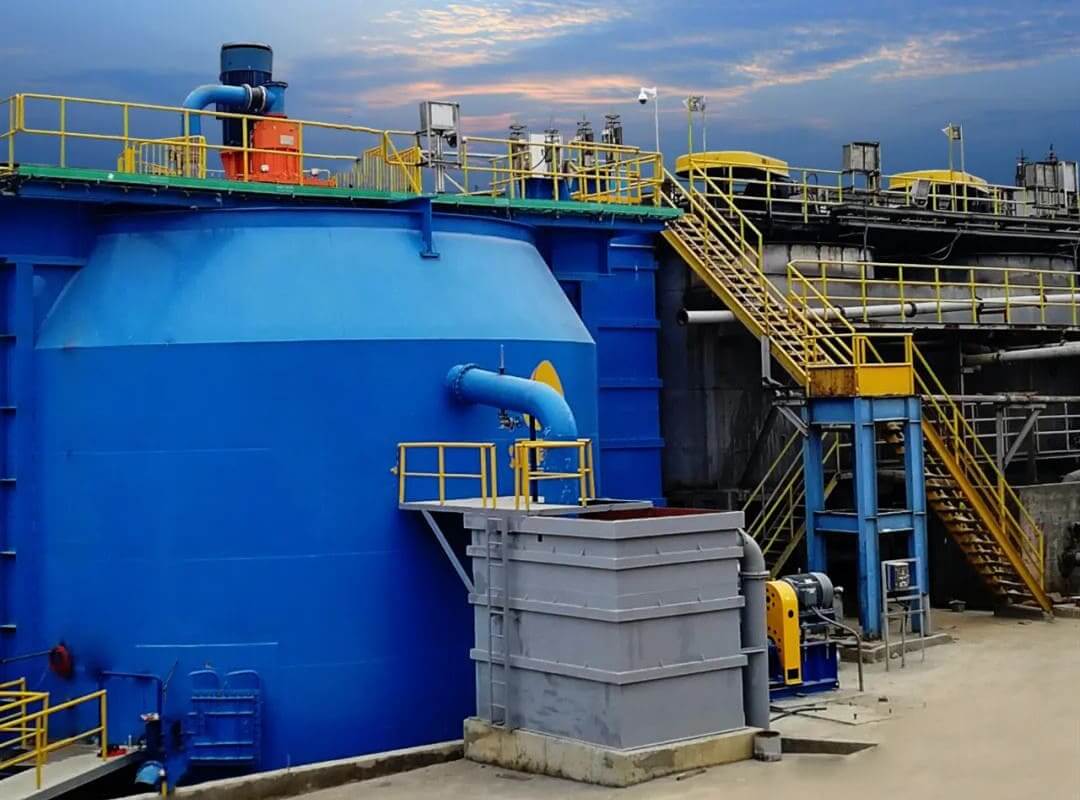
Performance of the 680 m³ Flotation Machine in the Molybdenum Ore Processing Plant
Molybdenum-Copper Processing Plant Overview
Capacity: 30,000 t/d
Process: The molybdenum ore flotation process employs a molybdenum-copper mixed flotation method, with molybdenum roughing tailings selected for sulfur, sulfur tailings selected for iron, and molybdenum rough concentrate reground before final selection, followed by copper selection from the concentrate tailings. The specific process is as follows:
1. The grinding process employs a semi-autogenous grinding (SAG) + hard rock crushing + ball milling (SABC) configuration.
A vertical mill serves as the regrinding equipment for molybdenum rough concentrate, while overflow ball mills handle the regrinding of molybdenum middlings. Molybdenum-sulfide separation utilizes a priority flotation process. The ore is coarsely ground to 60% passing -0.074 mm. After agitation and slurry preparation, it undergoes sequential molybdenum flotation, sulfur flotation, and iron magnetic separation. The molybdenum roughing-scrubbing stage employs a 1 roughing, 3 scrubbing, 1 roughing-concentrating process. Molybdenum middlings are reground and returned to the roughing operation. Sulfur flotation uses a 1 roughing, 1 scrubbing, 2 concentrating process. Iron undergoes magnetic roughing before being conveyed to the concentrating stage. The molybdenum rough concentrate undergoes thickening and deflocculation, three-stage regrinding, five-stage column concentrating, and four-stage concentrating-scavenging. This process yields a high-grade molybdenum concentrate with 57% molybdenum content and a standard molybdenum concentrate with 52% molybdenum content. Copper is recovered from the concentrating-scavenging tailings.
2. The molybdenum concentrate dewatering process employs a two-stage thickening-filter press dewatering flow.
Performance of the 680 m³ Flotation Machine
Comparison of Ore Properties
A 680 m³ flotation machine underwent industrial testing at a copper ore processing plant. Test results demonstrated the advanced capabilities of the 680 m³ flotation machine. Given the similarity between this copper ore and a molybdenum ore, a comparison of the properties and production scale of the two ores was conducted. The analysis results are presented in Table 1.
| Table 1: Comparison of Characteristics Between Molybdenum Ore and Copper Ore | ||||||
| Ore Processing Plant | Capacity (10,000 tons/d) | Raw Ore Grade (%) | Overall Recovery Rate (%) | Concentrate Grade (%) | Floating Concentration (%) | Grinding Fineness(-74ⴎm) (%) |
| Copper | 3.8 | 0.5 | 85 | 24 | 30 | 65 |
| Molybdenum | 3.0 | 0.11 | 86 | 52-57 | 30 | 60 |
As shown in Table 1, both the copper and molybdenum concentrators have processing capacities exceeding 30,000 t/d, with relatively low ore grades and consistent flotation concentrations and grinding fineness. Based on the successful field test results of the 680 m³ flotation cell at the copper concentrator, the application of this flotation cell for roughing and scavenging operations in molybdenum ore processing is feasible.
Comparison of Large-Scale Flotation Machine Schemes
Based on ore property analysis and engineering application considerations, a comparative evaluation was conducted for the maturely applied 320 m³ flotation machine, 260 m³ flotation machine, and 680 m³ flotation machine. The selected comparison schemes are: Scheme 1 employs the 680 m³ flotation machine, Scheme 2 employs the 320 m³ flotation machine, and Scheme 3 employs the 260 m³ flotation machine.
First, based on a production capacity of 30,000 t/d and field process inspections, the following conditions were established: roughing concentration 37.00%, scavenging 1 concentration 33.00%, scavenging 2 concentration 35.00%, scavenging 3 concentration 37.00%. The durations were set as follows: roughing time 12 min, scavenging 1 time 8 min, scavenging 2 time 8 min, scavenging 3 time 8 min. The number of flotation units for each scheme was calculated according to Section 7.8.3 of the Mineral Processing Design Manual. The calculation results are shown in Tables 2 to 4.
| Table 2: Molybdenum Roughing Flotation - 680m² Flotation Machine | ||||||
| Operation | Calculate the Slurry (m3/min) | Flotation Time(min) | Flotation Machine | |||
| Design | Actual | Tank Capacity(m3) | Calculate Number of Tanks (pcs) | Select Number of Tanks (pcs) | ||
| Molybdenum Roughing | 66.58 | 12 | 17.36 | 680 | 1.38 | 2 |
| Molybdenum Scavenging 1 | 67.69 | 8 | 8.54 | 680 | 0.93 | 1 |
| Molybdenum Scavenging 2 | 67.54 | 8 | 8.56 | 680 | 0.93 | 1 |
| Molybdenum Scavenging 3 | 64.99 | 8 | 8.89 | 680 | 0.90 | 1 |
| Table 3: Molybdenum Roughing Flotation - 320m² Flotation Machine | ||||||
| Operation | Calculate the Slurry (m3/min) | Flotation Time(min) | Flotation Machine | |||
| Design | Actual | Tank Capacity(m3) | Calculate Number of Tanks (pcs) | Select Number of Tanks (pcs) | ||
| Molybdenum Roughing | 66.58 | 12 | 16.33 | 320 | 2.94 | 4 |
| Molybdenum Scavenging 1 | 67.69 | 8 | 8.04 | 320 | 1.99 | 2 |
| Molybdenum Scavenging 2 | 67.54 | 8 | 8.04 | 320 | 1.99 | 2 |
| Molybdenum Scavenging 3 | 64.99 | 8 | 8.38 | 320 | 1.91 | 2 |
| Table 4: Molybdenum Roughing Flotation - 260m² Flotation Machine | ||||||
| Operation | Calculate the Slurry (m3/min) | Flotation Time(min) | Flotation Machine | |||
| Design | Actual | Tank Capacity(m3) | Calculate Number of Tanks (pcs) | Select Number of Tanks (pcs) | ||
| Molybdenum Roughing | 66.58 | 12 | 13.28 | 260 | 3.62 | 4 |
| Molybdenum Scavenging 1 | 67.69 | 8 | 9.79 | 260 | 2.45 | 3 |
| Molybdenum Scavenging 2 | 67.54 | 8 | 9.82 | 260 | 2.44 | 3 |
| Molybdenum Scavenging 3 | 64.99 | 8 | 10.20 | 260 | 2.35 | 3 |
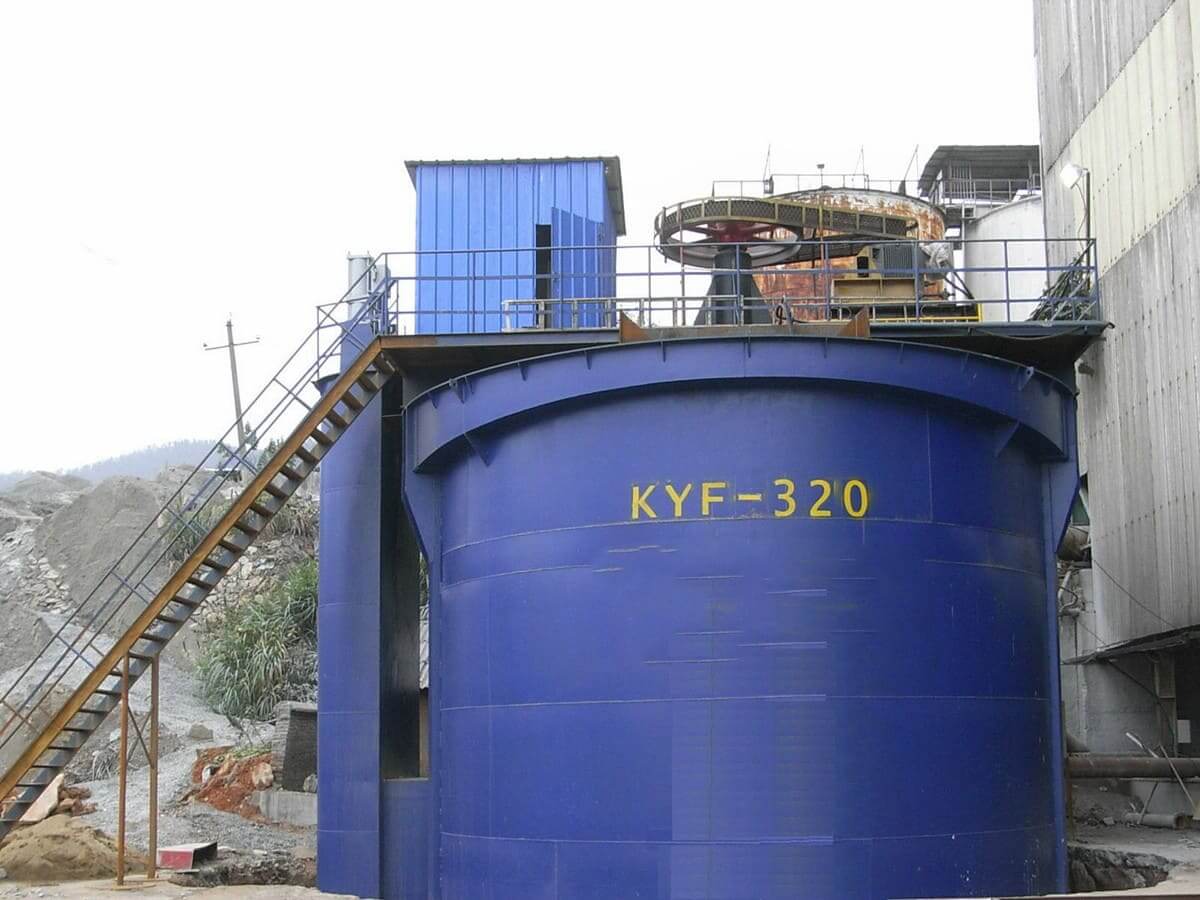
Molybdenum ore flotation tailings underwent sulfur flotation to recover sulfur concentrate. Considering the unified engineering equipment requirements, the comparison scheme for the 680 m³ flotation machine included sulfur roughing and scavenging operations alongside molybdenum roughing and scavenging operations. The sulfur roughing and scavenging equipment was calculated based on the process flow, determining the concentration and duration for each sulfur operation. The calculation results are shown in Table 5.
| Table 5: Roughing and Scouring of Sulfur - Flotation Machine | ||||||
| Operation | Calculate the Slurry (m3/min) | Flotation Time(min) | Flotation Machine | |||
| Design | Actual | Tank Capacity(m3) | Calculate Number of Tanks (pcs) | Select Number of Tanks (pcs) | ||
| Sulfur Roughing | 68.94 | 10 | 16.77 | 680 | 1.19 | 2 |
| Sulfur Scavenging | 66.68 | 8 | 8.67 | 680 | 0.92 | 1 |
| Sulfur Roughing | 68.94 | 10 | 11.86 | 320 | 2.53 | 3 |
| Sulfur Scavenging | 66.68 | 8 | 8.16 | 320 | 1.96 | 2 |
| Sulfur Roughing | 68.94 | 10 | 12.82 | 260 | 3.12 | 4 |
| Sulfur Scavenging | 66.68 | 8 | 9.94 | 260 | 2.41 | 3 |
As shown in Tables 2 to 5, the 680 m3 flotation machine (Scheme 1) selection plan comprises 5 units for molybdenum roughing and 3 units for sulfur roughing, totaling 8 units; The 320 m3 flotation machine (Scheme 2) configuration comprises 10 units for molybdenum roughing and 5 units for sulfur roughing, totaling 15 units; The 260 m3 flotation machine (Scheme 3) configuration comprises 13 units for molybdenum roughing and 7 units for sulfur roughing, totaling 20 units.
Comparing three different specifications of large-scale equipment, from a technical and economic perspective, larger equipment is more advantageous for engineering implementation, with the 680 m3 flotation machine being the optimal choice. Based on qualitative comparisons of ore types, the 680 m³ flotation machine is suitable for processing low-grade porphyry molybdenum ore.
Conclusion
The deployment of the 680 m³ intelligent flotation machine represents a quantum leap in molybdenum processing, proving that scale, automation, and energy efficiency can coexist in modern mineral beneficiation. By outperforming conventional flotation circuits in recovery rates, power savings, and operational stability, this technology sets a new benchmark for large-scale, sustainable ore processing. As mining operations continue to embrace digitalization and economies of scale, the success of this ultra-large flotation cell suggests a future where smart, high-capacity equipment becomes the standard—not just in molybdenum but across copper, gold, and polymetallic operations. The lessons learned from this case study could well reshape the design philosophy of flotation plants worldwide.